When you hand an infant or toddler to a sitter, you are trusting them with the most breakable variation of a person. Moms and dads feel that weight instinctively. Specialist nannies feel it on the job every single day. Yet several carers still rely upon good luck and guesswork in emergencies, due to the fact that appropriate first aid training really feels too sluggish, also costly, or also hard to schedule.
Express CPR and first aid courses exist to link that gap. When developed well, they deliver concentrated, high‑impact abilities fast, without turning into a shallow checkbox workout. When created terribly, they create the illusion of security with very little compound underneath.
I have educated enough sitters and nannies to see both ends of that range. What adheres to is a functional overview to what an express child care first aid course must resemble, which shortcuts are secure and which are not, and just how families and carers can collaborate to ensure those brand-new abilities really stick.
Why fast training for child care truly matters
The emergency situations that occur around youngsters are seldom significant in the beginning glimpse. A toddler places something in their mouth and goes peaceful. A baby in a bathroom seat slips lower than you become aware. A preschooler with a recognized peanut allergic reaction begins to impulse and cough throughout a birthday celebration party.
In each of those scenarios, the difference in between "I think they're great" and "I know what to do now" is determined in seconds.
For paediatric heart attack, brain injury can start within 3 to 4 mins without reliable CPR. Ambulance action times vary commonly. In lots of residential areas and regional locations, waiting 10 to 15 minutes is common. That space belongs to whoever is standing closest to the youngster, frequently a sitter or nanny.
That is why a fast first aid course or express CPR training is not a great bonus for child care workers. It is a core security control, appropriate along with smoke detector and secured cleaning products.
What "express" must and ought to not mean
The word "express" in training can conceal a whole lot. I have actually seen every little thing from a concentrated three‑hour paediatric CPR course that changed how a nanny approached her job, to a 60‑minute online slideshow with a "fast certification" at the end and no analysis at all.
A reputable express first aid course or express CPR course does three points well.
First, it narrows the scope to what the student really requires. A teen doing their first babysitting tasks does not call for the very same depth of knowledge as a paramedic. They do need high‑confidence abilities in CPR, choking, drowning, fundamental injury and allergic reactions.
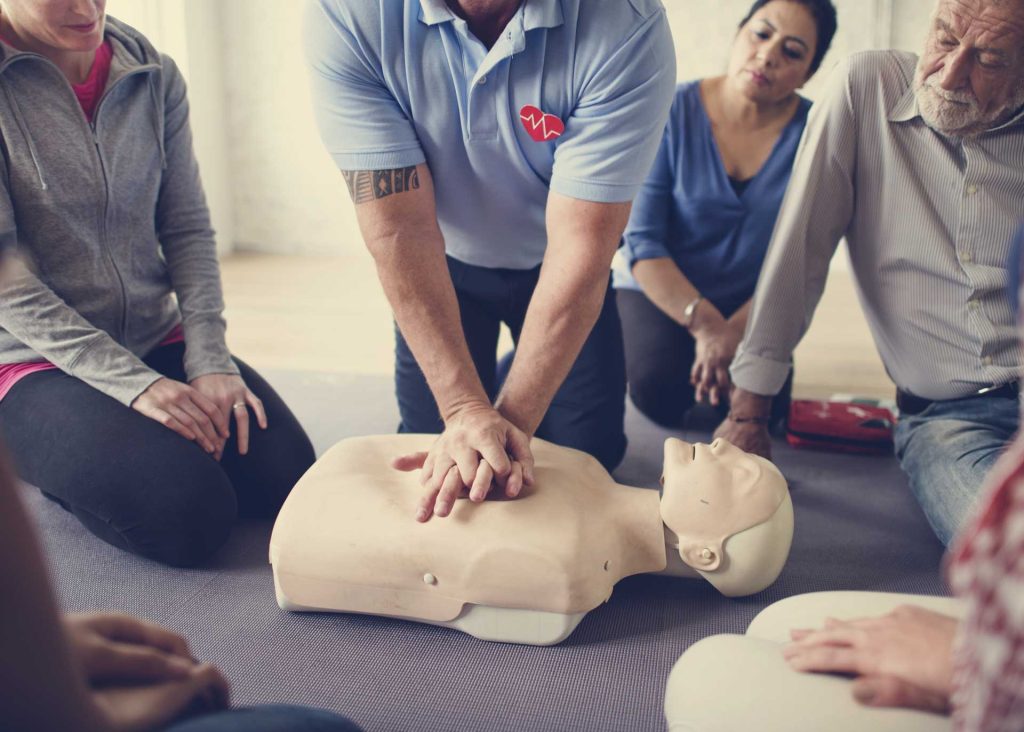
Second, it presses shipment, not practice. The theory element can be streamlined utilizing pre‑course analysis, brief video clips, or combined learning. The hands‑on CPR training and situation job, however, can not be rushed to the point where trainees hardly touch the manikins.
Third, it evaluates competence honestly. A correct express first aid training session still includes functional checks. The trainer sees each pupil gone through CPR, choking, recuperation position and various other core activities with enough repeating that muscular tissue memory begins to form.
If an express cpr course assures to have you "in and out" in under an hour with a complete first aid certificate, deal with that as a warning sign, not a marketing point.
The genuine dangers sitters and nannies face
When moms and dads ask me, "What emergency situations do you see most with young youngsters?", they typically expect tales concerning magnificent trauma. Loss from trees, auto accident, remarkable rescues.
Those occasions happen, but they are unusual in residential childcare. What comes up over and over in homes and play grounds looks extremely various:
A sitter I trained once came back for a fast cpr refresher course visibly drunk. She had been looking after an 8‑month‑old who began coughing throughout a feed, after that went quiet, with milk gurgling from the nose. Because she had actually practised baby choking drills in a first aid and cpr course just weeks before, she identified the modification from loud to silent, used back blows properly, and got rid of the air passage before the parents also reached the area. She told me later on that without that current express cpr training, she would possibly have attempted to "scoop" the mouth with her fingers and risked pushing the blockage deeper.
These are not abstract dangers. They match what emergency situation divisions see every day.
Non flexible abilities for an express childcare first aid course
A great express child care first aid course does not try to cover every subject under the sun. It focuses hard on the occasions that are both usual and high‑consequence. In practice, that need to consist of a minimum of the following:
Child and baby CPR Choking acknowledgment and relief for children and kids Drowning feedback and risk-free rescue strategies in home settings Severe allergic reactions, including auto‑injector usage Basic blood loss control, head injuries and when to call an ambulanceSome courses include seizures, burns and poisoning essentials within the same fast first aid framework. That is excellent if time enables. If you are comparing fast first aid courses, take note not simply to how long the class runs, yet to how much meaningful material sits inside those hours.
How express CPR training is various for children
Standard grown-up CPR courses deal with a full‑sized manikin and concentrate on chest depth, compression rate and defibrillator usage. These items still matter for older kids, but carers of infants and young children require extra, really certain skills.
The details can really feel small, yet they are crucial. The depth of compressions for a baby, for example, has to do with one third of the breast deepness, typically attained with two fingers as opposed to 2 hands. Mouth‑to‑mouth becomes mouth‑to‑mouth‑and‑nose for babies. The sequence of back strikes and breast thrusts for choking babies is different from the abdominal drives typically instructed for adults.
In an express childcare first aid training session, this paediatric focus should dominate the schedule. If the instructor spends a lot of the class on grown-up circumstances and just tacks on a quick "and below's what's different for youngsters" at the end, the top priorities are backwards.
Ask directly whether the course is a paediatric‑specific express cpr training or a common class with a short child segment bolted on. The distinction shows when you are kneeling beside a high chair, heart pounding, trying to bear in mind what to do.
Balancing speed and deepness in fast first aid courses
There is a natural tension between fast first aid and thorough first aid training. Parents desire caretakers qualified before following weekend break. Baby-sitters functioning long days require courses that match rare days off. Training companies have to cover nationwide competencies within repaired hours.
From what I have actually seen, the most efficient express first aid courses make use of a mixed version:
Classroom or functional session time concentrates practically entirely on hands‑on job: compressions, breaths, choking drills, auto‑injector technique, and realistic child care scenarios.
Theory, such as identifying indicators of shock, recognizing fundamental makeup, or learning the distinction in between a mild and serious allergy, is changed to pre‑course reading or interactive components. Trainees complete this "fap first aid" design structure by themselves tool prior to turning up.
That framework values the factor of a fast first aid course near me or near you. You spend your in‑person time on the items that can not be instructed using message. It additionally suggests carers get here with even more context and much better questions.
If you come across "fast first aid training" that is totally lecture‑based, no technique, and still asserts to prepare babysitters genuine emergency situations, you are checking out a box‑ticking exercise, not a security investment.
Online, in‑person and mixed: what jobs best for childcare
Online knowing has gained its place in the first aid globe. I have seen reluctant teenagers end up being far more comfortable with the essentials after an excellent online module, since they might stop briefly, rewind and remember without feeling watched.
However, for CPR training and choking feedback, responsive learning counts. The first time you understand just how much pressure it actually requires to press a child manikin to the correct depth, it rewires your sense of what "company" means.
For babysitters and nannies, one of the most trusted combination is:
Online or self‑paced part that covers concept, lawful responsibilities, infection control and basic recognition of illness.
Short, express in‑person component concentrated on CPR courses material, choking alleviation, allergies, sinking and injury situations, with lots of time for questions.
When you search for first aid and cpr training classes or "fast cpr courses" in your area, search for that blended style rather than a single short Zoom phone call. If you must pick purely on-line for logistical reasons, devote to routine, purposeful experiment a lent or rented manikin, and rejuvenate even more often.
What a sensible express child care first aid course day really feels like
Parents in some cases image first aid training as a day spent sitting in rows, staring at slides. An excellent express child care first aid course really feels very different.
The power is functional. After a brief safety and security brief, the teacher generally sets expectations plainly: students will be on the floor, relocating, switching roles in between "rescuer" and "parent", and repeating methods numerous times.
In a 3 to 4‑hour express first aid course focused on childcare, you can expect:
Short theory ruptureds adhered to by instant method. For example, two mins explaining the differences in paediatric CPR, then right to the manikins.
Scenario based understanding. Someone role‑plays a kid that has begun choking at lunch. An additional trainee plays the caretaker. A third plays the distressed moms and dad on the phone with emergency situation solutions. This is where individuals truly comprehend exactly how stress and anxiety hazes memory.
Real stories and reasoning phone calls. Good trainers share near‑misses and blunders in addition to book examples. You discover not just the algorithm, yet just how it breaks down when a young child's sibling is howling nearby.
Honest responses. Compression depth also shallow? Hands in the incorrect spot on the infant upper body? Recuperation position leaving an air passage partially blocked? These details obtain dealt with in the room, prior to they matter for real.
Babysitters often get here worried, particularly teens doing their first serious adult course. A lot of leave more positive, however likewise more respectful of the responsibility they lug. That change alone changes how they approach risky moments, such as bath time or mealtimes.
Choosing the best express cpr course as a moms and dad or employer
Not all first aid courses are produced equal, and "express" branding provides cover for both exceptional and awful programs. A couple of pointed concerns normally disclose which you are dealing with.
Here are sensible concerns to ask any kind of service provider prior to scheduling an express child care first aid or express cpr course:
Is the course specifically concentrated on kid and baby first aid, or is it a common adult course with a short paediatric add‑on? How much time is invested in hands‑on technique compared to talk or video? What analysis is needed to earn the first aid certificate, and can participants fall short and be re‑assessed? Are circumstances customized to home child care circumstances, such as choking at nourishments, bath cases and playground injuries? How long is the certification valid, and do you use a fast cpr correspondence course alternative later on?Reputable suppliers will address these pleasantly and transparently. If the responses are unclear, or you sense stress to register swiftly without details, maintain looking. There are plenty of fast first aid courses that respect both your time and your kid's safety.
How typically must babysitters and baby-sitters freshen CPR skills?
Skills fade. Not just understanding, but the tiny, physical behaviors that matter in a crisis. Just how much to tilt an infant's head. How difficult to press. Just how to kneel in a manner that lets you keep going for greater than one minute.
Most guidelines advise refreshing CPR yearly and doing a complete first aid and cpr course every three years. For child care workers, I typically encourage shorter periods if possible.
Babysitters that only function periodically frequently benefit from express cpr courses yearly that are deliberately short and focused. A 90‑minute fast cpr refresher course on paediatric CPR and choking can bring those physical skills back to the surface without requiring a full time off college or work.
Professional baby-sitters who are the primary daytime carer might desire even more than that. A mix of one complete first aid and cpr course cycle and one express child care first aid training rejuvenate in between gives a strong baseline over several years.
If expense is a barrier, family members can help. Many moms and dads are happy to divide the cost of fast first aid training with their normal sitter, or cover it entirely, once they realise how straight it shields their child.
Integrating training with the details kid and household
No express first aid course, nevertheless well made, can cover the distinct mix of risks in every family. Medicine in washroom cabinets. Pools without fences. Siblings with harsh play habits. Pets that overturn toddlers.

The most reputable plans I see always pair formal first aid training with an organized conversation in the home. Preferably, that discussion happens throughout a handover in between moms and dad and sitter, not yelled on the doorstep 5 minutes prior to departure.
Topics worth covering include:
Where first aid supplies and any kind of child‑specific medications are kept, and what carers can and can not administer.
Which neighbors or close-by family members understand the kid and can be employed enhancement to emergency situation services.
Pool, bathroom and rest security policies, such as never ever leaving a child alone in or near water, and risk-free sleep positions.
Allergies, asthma strategies and any kind of other pertinent medical history, with written guidelines and physician get in touch with details.
How the family anticipates carers to stabilize "call us initially" versus "call a rescue first". In a true emergency, there is rarely time to discuss this.
An express child care first aid course gives sitters and first aid courses Cannon Hill - fastfirstaidcpr.com.au baby-sitters the tools. The family instruction reveals them where to use those tools and where the concealed catches lie.
Legal and emotional aspects that training hardly ever covers
Most fast first aid courses, especially express first aid courses tailored to non‑clinicians, do a decent work on practical abilities. They usually skim over 2 locations that matter a large amount for babysitters and baby-sitters: legal convenience and emotional fallout.
On the legal side, babysitters sometimes wait to start CPR or utilize an EpiPen because they bother with "doing it wrong" and being criticized. In many territories, "good Samaritan" securities exist for laypeople acting in good belief, however the details differ. While a first aid fitness instructor can not offer legal guidance, they should at the very least discuss consent essentials, acting within your training, and the strong expectation from both health and wellness services and households that you act, rather than freeze.
Emotionally, managing a real emergency entailing a kid you look after is intense. Even when everything goes right, carers may experience guilt, anxiety or nightmares. A handful of minutes in an express cpr training session invested normalising those reactions can make it much easier for sitters to seek assistance if something does happen.
I still keep in mind a baby-sitter who did CPR on a 3‑year‑old after a near‑drowning in a yard swimming pool. The youngster made it through without any lasting injury. The nanny, nevertheless, invested months frightened of bathroom time, even for herself. Her remorse was not the occasion itself, which had numerous adding variables, however that no one had prepared her for how heavy success could feel. Training can not eliminate that, yet it can call it and make it less complicated to carry.
When a fast first aid course is insufficient on its own
Despite their worth, express first aid and express cpr courses are not magic. Some scenarios demand deeper training.
Live in baby-sitters caring for babies with complicated medical histories, such as heart conditions or persistent lung illness, need in-depth, child‑specific education and learning from doctor. A public first aid course can not replace that.

Families with swimming pools, trampolines, ranches or regular traveling to remote areas have threat accounts that surpass a regular suv house. In those instances, additional modules on sinking prevention, spinal safety measures, snakebite or remote‑area first aid might be appropriate.
Babysitters responsible for groups of children, such as at parties or informal holiday treatment, ought to take into consideration a lot more extensive first aid courses that attend to crowd management, discharge and multi‑casualty prioritisation.
Fast first aid courses radiate when they belong to a split safety and security strategy: safe physical atmosphere, alert supervision, clear house rules, and solid, up‑to‑date emergency skills.
Making express CPR and first aid part of your typical child care culture
The most powerful shift I see in family members and baby-sitter plans is when first aid and CPR stop being a one‑off difficulty and enter into the normal language of care.
Parents start asking possible caretakers not just, "Do you have a first aid certificate?" but "When did you last do a fast first aid course?" and "Are you comfy with baby CPR?" Sitters start to detail "express child care first aid course finished, refresher due next June" on their profiles, the means they would provide driving licences or child care qualifications.
Nanny firms construct express childcare first aid courses and first aid and cpr training classes right into their onboarding, rather than treating them as optional extras. Some even set up group express first aid training days that fit around change patterns, making it simpler for employees to attend.
None of this eliminates threat completely. Childhood entails falls, spills, experiments and surprises. What appropriate express cpr courses and fast first aid training do deal, however, is a sensible opportunity that the grownup in the space will certainly understand what to do when the rare, severe minutes arrive.
For sitters and nannies, that knowledge is a specialist asset. For moms and dads, it is just one of the few items of peace of mind that can be gained as opposed to wished for.